
Welcome to the
Beyond the Lanes Blog
Blog

Gratitude Is a Performance Skill
Saturday morning league. No bumpers. A kid on the approach with a ball that feels almost too heavy. And out on the lane, a volunteer crouched down, pointing at the board I was supposed to hit. That kid was me. And that volunteer didn’t have to be there. I always thanked my childhood coach, but I don’t know if I ever properly thanked the others. So, a little late. Thank you.
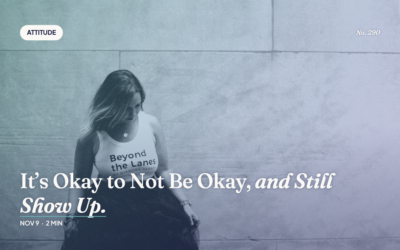
It’s Okay to Not Be Okay, and Still Show Up
You step up on the approach. Ball in your hand. And nobody watching knows what you carried in with you. I think everybody has competed while struggling emotionally at some point. Maybe it’s something outside of bowling. Maybe it’s doubt, or comparison, or a slump that won’t let go. If you’re struggling quietly right now, I want you to hear this: you are not alone.
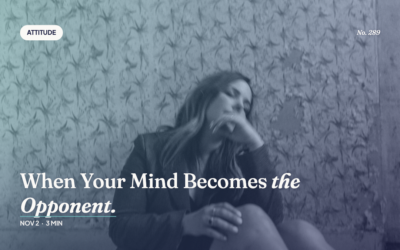
When Your Mind Becomes the Opponent
You’re standing on the approach. Ball in your hand. And your mind is everywhere but here. It’s on what the bowler next to you just shot. It’s on the standings. It’s on everything except the one shot in front of you. That’s what it feels like when your own mind is working against you. The inner critic can sit in the room. It just doesn’t get a vote.
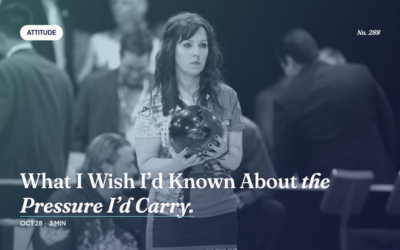
What I Wish I’d Known About the Pressure I’d Carry
It felt like I was waiting forever. I was the number one seed. I led qualifying, and no one beat me in double elimination. Then I stepped onto the live TV pair and made every single mistake in the book. Here’s the kind of pressure nobody warns you about: when you’re the underdog, no one is looking at you. Once you emerge from the shadows, everyone is.
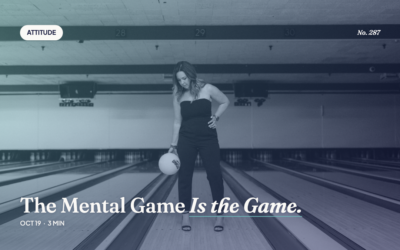
The Mental Game Is the Game
I was twelve years old when my parents handed me a mental game book. I read it. I didn’t understand half of it. And that turned out to be fine. You don’t have to get it all at once. A sentence that meant nothing at twelve shows up at twenty, right when you need it. The mental game isn’t extra credit. It’s the game.

The School-Bowling-Life Balance Lie
My friends were at the football game. I was on my way to a bowling tournament. That was a lot of my high school weekends. I chose that every time. But the part I want to talk about isn’t the sacrifice. It’s a lie student-athletes tell themselves all the time. That balance means doing everything, all at once, all the way. It doesn’t.

What Makes You Powerful Off the Lanes Makes You Powerful On Them
Everyone was saying yes. I said no. It wasn’t dramatic. It was just clear. I didn’t want to do it, so I didn’t. That has nothing to do with bowling. And it has everything to do with how I bowl. Some of the most powerful things I bring to the lanes, I learned off them.

The Whole Athlete: Why Mental, Physical, and Emotional Have to Move Together
There’s no skipping to the good part. Everyone wants a shortcut. But you get out what you put in — and that means going through all the bad parts. The moments you feel your worst are the most important moments. A loss is telling you something. If your eyes are open to what it’s saying, that lesson is what propels you to win.

Bowling Is What You Do — Not Who You Are
For most of my life, “bowler” was practically part of my name. Diandra, the bowler. That is how people introduced me. That is how I introduced myself. And somewhere along the way, I stopped noticing where the word ended and I began. Bowling is not who I am. It is something I do. And that distinction changes everything.

About Me
Diandra grew up in a small town in Indiana. She was the epitome of “small town girl” BIG DREAMS. When she was 12 years old she knew she wanted to be one of the best bowlers in the world one day. And so she did. She was the 3x World Bowler of the Year and was even inducted into the World Bowling Hall of Fame at 25.
Getting to the top wasn’t all about the expertise she learned on the lanes. It was also about the values, and principles she learned Beyond the Lanes that would get her to the very tip-top of her sport.